
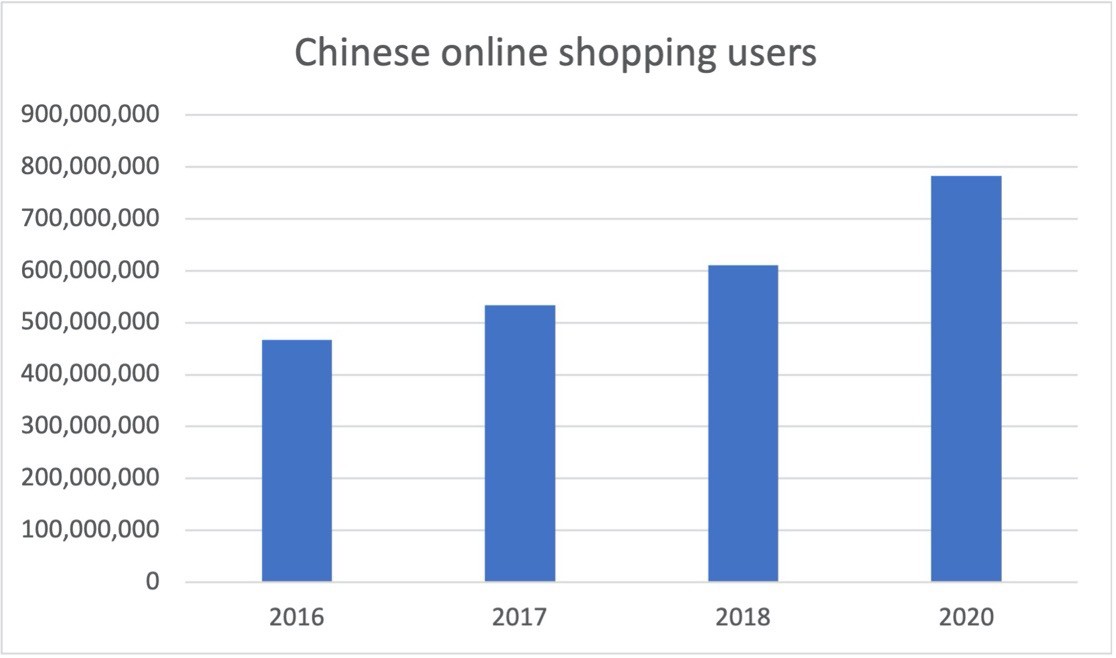
Scale of online shopping users in China
According to statistical data, the scale of online shopping users in China is steadily increasing year by year. In 2016, the number of online shopping users in China was 466,700,000, 533,320,000 in 2017 and 610,110,000 in 2018. In 2020, it will break...
On This Page
The Explosive Growth of Online Shopping in China: Opportunities and Challenges for International Brands
China's digital landscape has been undergoing a remarkable transformation, with the country leading the global charge in e-commerce and online shopping. As the world's largest e-commerce market, China has witnessed an unprecedented surge in the number of online shoppers, presenting both immense opportunities and unique challenges for international brands seeking to establish a foothold in this dynamic market.
The Rise of China's Online Shopping Powerhouse
According to statistical data, the scale of online shopping users in China has been steadily increasing year by year. In 2016, the number of online shopping users in China was 466,700,000, which grew to 533,320,000 in 2017 and 610,110,000 in 2018. Remarkably, in 2020, the number of online shopping users in China broke through the general population and reached an astounding 782,410,000.
This exponential growth can be attributed to a confluence of factors, including the widespread adoption of smartphones, the expansion of high-speed internet infrastructure, and the growing purchasing power of China's burgeoning middle class. Additionally, the COVID-19 pandemic has further accelerated the shift towards online shopping, as consumers have become increasingly accustomed to the convenience and safety of e-commerce platforms.
The Dominance of China's E-commerce Giants
Fueling this remarkable growth are the titans of China's e-commerce industry, led by the likes of Alibaba, JD.com, and Pinduoduo. These platforms have not only revolutionized the way Chinese consumers shop but have also established themselves as indispensable gatekeepers for international brands seeking to penetrate the Chinese market.
Alibaba's Tmall, for instance, has become the go-to platform for international brands, offering a comprehensive suite of services, from brand building to logistics and customer service. JD.com, on the other hand, has carved out a niche as a trusted online retailer known for its authenticity and reliable delivery network. Meanwhile, the rise of social e-commerce platforms like Pinduoduo has introduced a new channel for brands to engage with consumers through innovative, community-driven shopping experiences.
The Evolving Landscape of Chinese Consumers
As the number of online shoppers in China continues to soar, the preferences and behavior of Chinese consumers have also undergone a remarkable transformation. Today's Chinese consumers are more discerning, tech-savvy, and brand-conscious than ever before, with a growing appetite for high-quality, innovative products that cater to their unique needs and aspirations.
Millennials and Generation Z, in particular, have emerged as the driving force behind China's e-commerce revolution, accounting for a significant portion of online shopping activity. These young, digitally-native consumers are not only influenced by social media trends but also demand personalized, omnichannel shopping experiences that seamlessly blend online and offline elements.
Navigating the Challenges of the Chinese Market
While the sheer scale and growth potential of China's online shopping market present immense opportunities for international brands, successfully navigating this dynamic landscape also comes with its fair share of challenges. From adapting to the nuances of local consumer preferences to navigating the complex regulatory environment, international brands must be prepared to overcome a range of obstacles to achieve sustainable growth in China.
Localization and Adaptation
One of the key challenges for international brands is the need to deeply understand and adapt to the unique preferences and behavior of Chinese consumers. This includes tailoring product offerings, marketing strategies, and e-commerce platforms to cater to the specific needs and expectations of the local market. Brands that fail to localize their approach often struggle to resonate with Chinese consumers and ultimately fail to gain traction.
Regulatory Compliance and Operational Complexities
The Chinese market is also characterized by a complex regulatory landscape, with a myriad of rules and requirements governing everything from product labeling to data privacy and cross-border e-commerce. International brands must navigate these complexities and ensure full compliance to avoid costly legal and operational challenges. Additionally, the logistical and fulfillment requirements of the Chinese market, including the need for localized warehousing and delivery networks, can pose significant hurdles for brands unfamiliar with the local landscape.
Key Takeaways for International Brands
As international brands explore the vast potential of China's online shopping market, the following key insights can help guide their strategic approach:
- Embrace Localization: Invest in deep consumer research and adapt your products, marketing, and e-commerce strategies to align with the unique preferences and behavior of Chinese consumers.
- Leverage China's E-commerce Giants: Partner with leading platforms like Alibaba, JD.com, and Pinduoduo to gain access to their vast user base and leverage their comprehensive suite of services.
- Prioritize Omnichannel Experiences: Integrate online and offline touchpoints to deliver a seamless, personalized shopping experience that caters to the evolving needs of Chinese consumers.
- Navigate Regulatory Complexities: Ensure full compliance with China's regulatory landscape and seek the guidance of local experts to mitigate operational challenges.
- Embrace Innovation and Agility: Continuously adapt and innovate to stay ahead of the curve in China's fast-paced and dynamic e-commerce landscape.
Conclusion
The explosive growth of online shopping in China presents a remarkable opportunity for international brands to tap into the world's largest e-commerce market. However, success in this dynamic landscape requires a deep understanding of local consumer preferences, a willingness to adapt, and a strategic approach that leverages the unique capabilities of China's e-commerce giants. By embracing localization, navigating regulatory complexities, and delivering innovative, omnichannel experiences, international brands can unlock the tremendous potential of the Chinese online shopping market and establish a sustainable presence in this rapidly evolving landscape.
Ready to Apply These Insights?
Talk to our China marketing experts and get a strategy tailored to your brand.
Related Articles

618 Shopping Festival 2025: A Strategic Shift in A Digital Shopping Ecosystem in China
The mid‑year 618 Shopping Festival has evolved far beyond a simple discount event. This year, it became a strategic showcase highlighting how Chinese e-commerce is redefining itself through smarter spending, advanced tech, high‑impact content, policy...
19 Jun 2025

China Car Market Report 2023H1
In recent years, China's automotive industry has experienced fast transformation. Technological alliances and partnerships becoming an increasingly focus in each brand's strategy.
3 Oct 2023

How to Write Better Chinese Ad Copies
When writing creative ad copy for the Chinese market, we need to closely consider the audiences, the culture differences, the brand proposition, the product features, creatives and the user journeys. Different products and user journeys caused differ...
28 Sept 2023