Introduction
For two decades, search engine optimisation (SEO) has been the foundation of China's digital marketing playbook. International brands competing for Chinese consumers poured resources into Baidu rankings, keyword density, and backlink profiles. It worked — Baidu commanded over 70% of China's search market, and a top-three organic ranking could make or break a brand's visibility.
That world is changing. Dramatically.
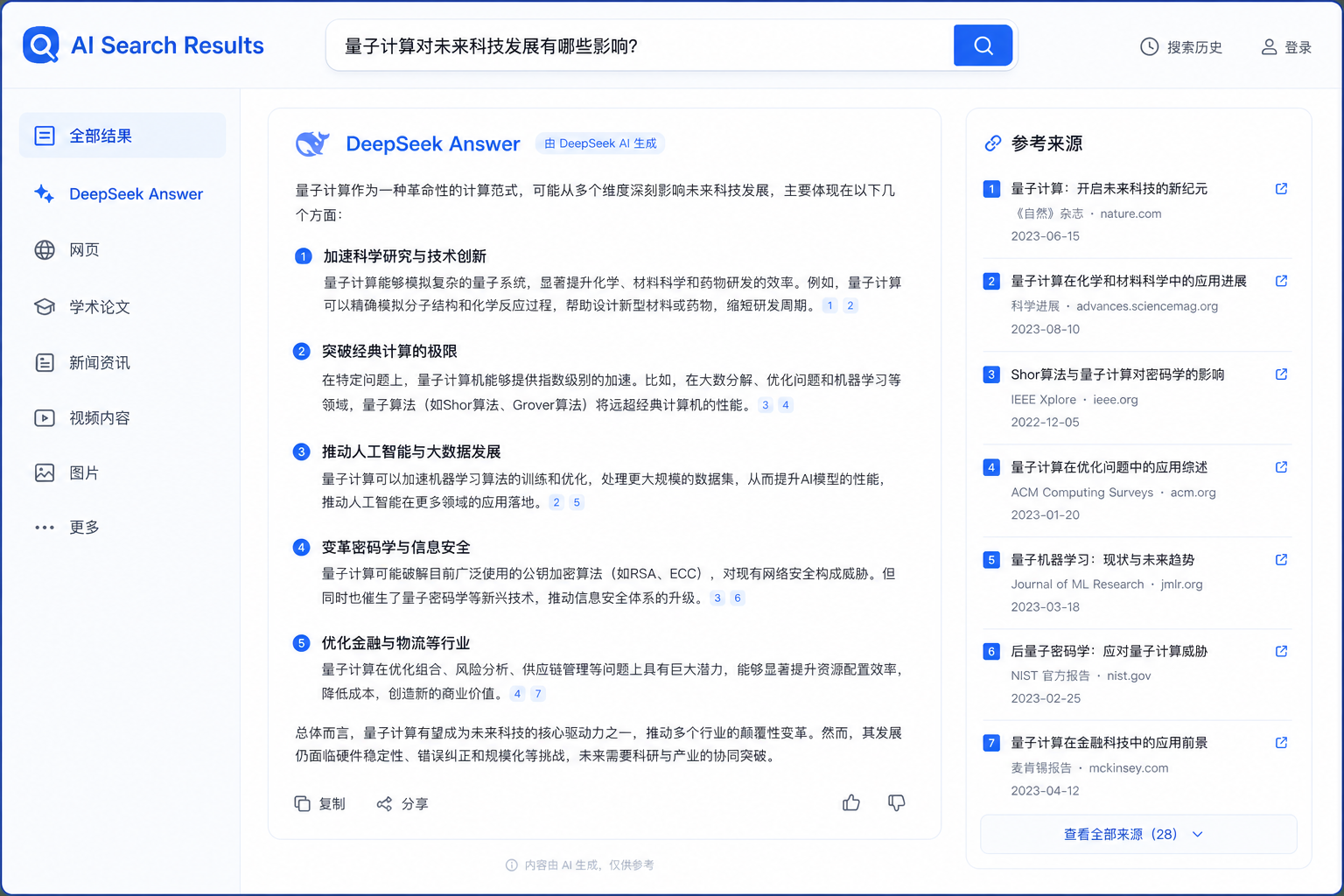
China is now at the forefront of a global shift from traditional search engines to generative AI-powered answer engines. DeepSeek, Baidu's Ernie Bot (文心一言), Alibaba's Tongyi Qianwen (通义千问), and Moonshot AI's Kimi are redefining how Chinese consumers find information. Instead of browsing a list of blue links, users receive AI-generated, conversational answers that synthesise information from multiple sources — often without attributing or linking back to individual websites.
This shift demands a new discipline: Generative Engine Optimization (GEO) . GEO is not a replacement for SEO — it is a fundamental rethinking of how content is structured, delivered, and surfaced in an AI-mediated discovery environment.
In this article, we break down what GEO means for international brands in China, how it differs from traditional SEO, and the concrete steps you can take today to ensure your brand is discovered by China's AI search engines.
What Is GEO and Why Does It Matter in China?
The Rise of AI Answer Engines
Generative Engine Optimization, or GEO, refers to the practice of optimising content specifically for consumption and citation by large language models (LLMs) that power AI search experiences. Where traditional SEO targets a search engine's ranking algorithm, GEO targets the training data and retrieval processes that inform an AI's generated response.
The stakes in China are uniquely high. Unlike Western markets where AI search is supplementary (Google's AI Overviews cover roughly 30% of queries), China's AI-native search platforms are rapidly becoming primary entry points:
- DeepSeek — China's most disruptive AI model, offering free, high-quality conversational search with deep reasoning capabilities. DeepSeek R1 rivals OpenAI's o1 in mathematical and logical reasoning, making it a go-to for research-heavy queries.
- Baidu Ernie Bot (文心一言) — With Baidu's massive search data as a foundation, Ernie Bot now handles over 200 million daily queries, with AI-generated answers appearing prominently in Baidu's search results pages (SERPs).
- Alibaba Tongyi Qianwen (通义千问) — Integrated across Alibaba's ecosystem (Taobao search, DingTalk, cloud services), Qianwen influences product discovery and B2B research.
- Moonshot Kimi — A dark horse with 20+ million monthly active users, Kimi excels at long-context understanding and is popular among Chinese professionals and students.
#
How GEO Differs from Traditional SEO
| Dimension | Traditional SEO | GEO |
|---|---|---|
| Target | Search engine ranking algorithm | LLM training data + retrieval |
| Primary metric | Position in SERP | Citation frequency in AI responses |
| Content structure | Keyword-dense, headings, meta tags | Semantic depth, entity richness, structured data |
| Key ranking factor | Backlinks, domain authority | Factual accuracy, authoritativeness, recency |
| User experience | Click-through to website | Answer consumed within AI interface |
The critical insight for international brands: if an AI search engine answers a user's question without citing your brand, you have effectively lost that customer — there is no click-through, no website visit, no conversion opportunity.
The Six Pillars of GEO for China
1. Authoritative Entity Building
AI search engines prioritise content from recognised authorities. For international brands in China, this means:
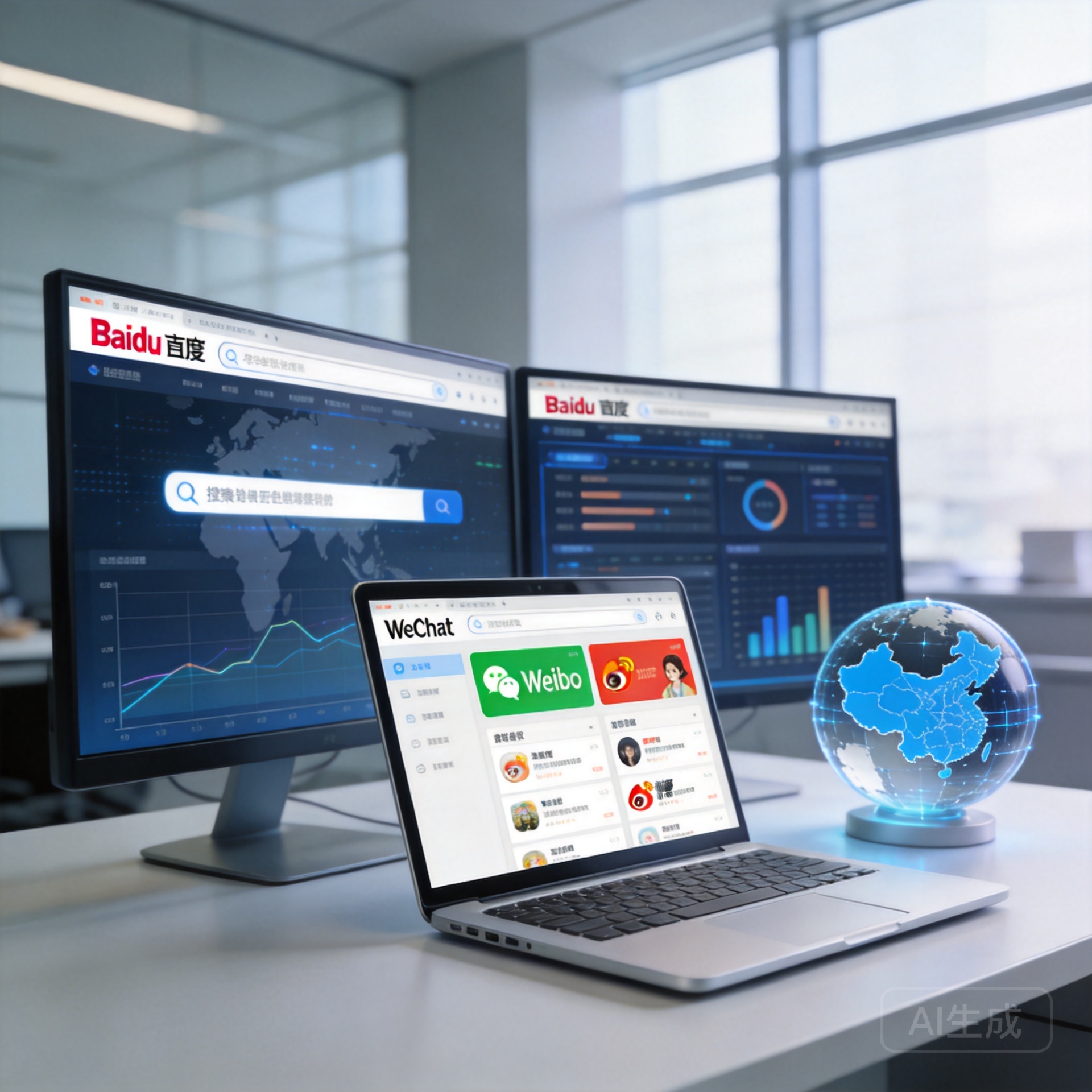
- Establish Baidu Baike (百度百科) pages — The single most powerful signal of authority for any LLM. A verified Baike entry is treated as a primary source by all major Chinese AI search engines.
- Secure mentions on authoritative Chinese platforms — Zhihu (知乎, China's Quora), 36Kr (36氪), and Jiemian (界面新闻) carry disproportionate weight in AI-generated responses.
- Build WeChat Official Account content — WeChat's public content is indexed by Baidu and referenced by Ernie Bot. Consistent, high-quality WeChat article publications signal ongoing authority.
2. Semantic Depth Over Keyword Density
GEO favours comprehensive topic coverage over keyword repetition. A 2025 study by researchers at Tsinghua University found that AI-optimised content with broad semantic coverage achieved 4.7× higher citation rates in LLM-generated responses compared to traditional keyword-optimised articles.
Best practices:
- Cover a topic from multiple angles (definition, examples, data, comparisons, expert opinions)
- Use natural language that mirrors how users ask questions in conversational AI
- Include entity-rich content — proper nouns, dates, statistics, and brand names with context
- Structure content to directly answer common follow-up questions
3. Structured Data and Schema Markup
While traditional SEO uses Schema.org markup for rich snippets, GEO requires a more comprehensive approach:
- FAQ schema with question-answer pairs that AI engines can extract verbatim
- How-to schema for step-by-step guidance
- Article schema with complete author, publication date, and organisation information
- BreadcrumbList schema to establish content hierarchy and relationships
#
4. Factual Accuracy and Source Citation
AI search engines, particularly Ernie Bot and DeepSeek, are increasingly trained to verify claims against reliable sources. Content with verifiable citations — especially those linking to government statistics, industry reports, and academic research — is significantly more likely to be referenced in AI-generated answers.
For China market content, key authoritative sources include:
- National Bureau of Statistics of China (国家统计局)
- China Internet Network Information Center (CNNIC) reports
- iResearch (艾瑞咨询) and Analysys (易观) industry reports
- Ministry of Commerce (商务部) policy documents
5. Freshness and Content Velocity
AI search engines across China all incorporate recency signals. Baidu's Ernie Bot explicitly prioritises content published within the last 30-90 days for news and trend-related queries. Maintaining a consistent publishing cadence — ideally 2-3 articles per week — signals that your brand is an active, current authority in your space.
6. Multilingual and Code-Switching Readiness
China's AI search engines increasingly handle English-to-Chinese code-switching in queries. An international brand's content should be prepared in Simplified Chinese, with technical terms and brand names presented in both languages. DeepSeek, in particular, shows strong cross-lingual capability and frequently references English-language sources when they are deemed authoritative.
How to Measure GEO Performance
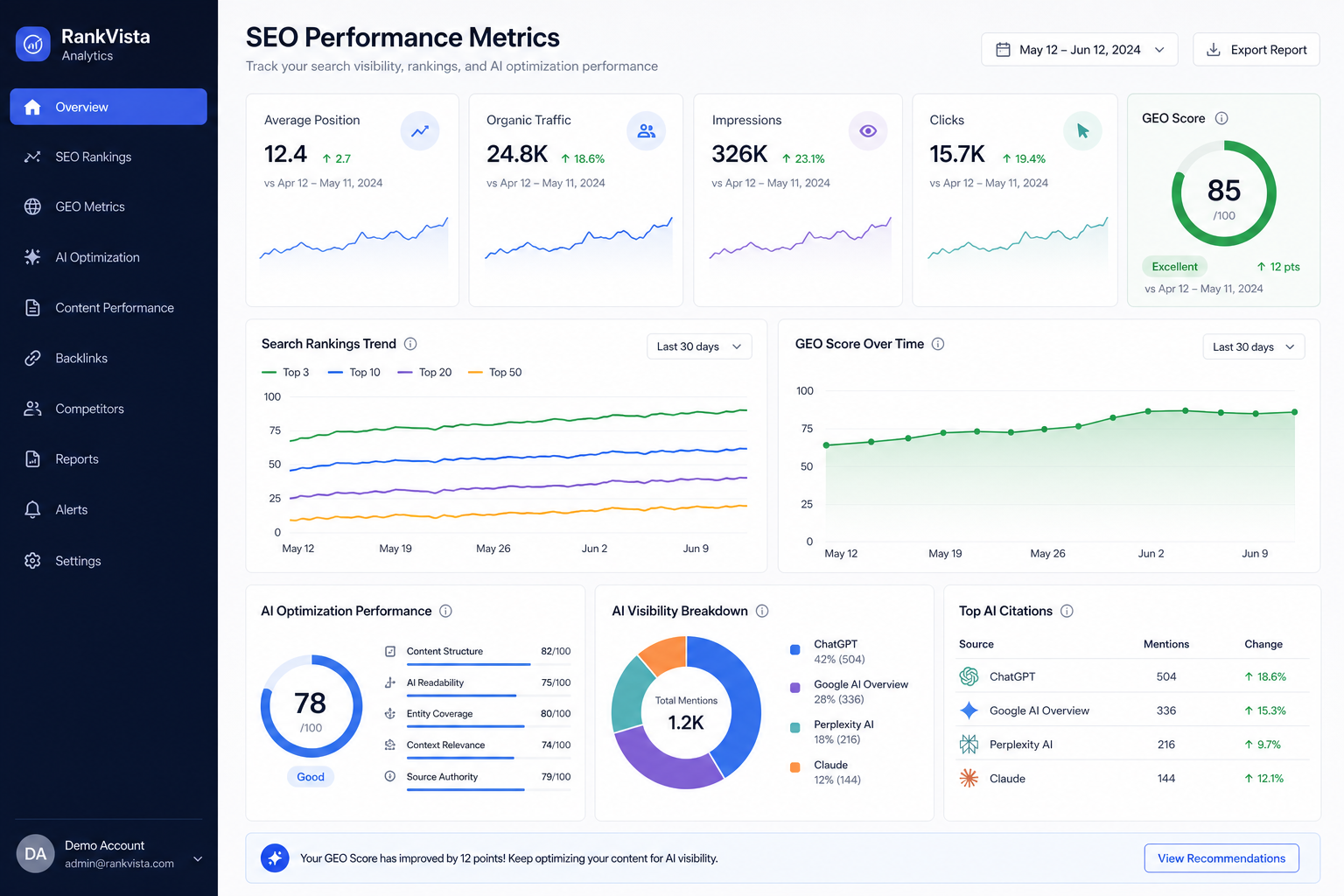
Measuring GEO effectiveness requires different metrics than traditional SEO:
| Metric | What It Measures | How to Track |
|---|---|---|
| AI Citation Count | How often your content is referenced in AI responses | Manual testing with prompt templates across Ernie Bot, DeepSeek, Kimi |
| Answer Inclusion Rate | % of relevant AI-generated answers that mention your brand | Build a benchmarking dashboard with target queries |
| Source Attribution | Whether AI responses link back to your content | Monitor referral traffic from AI platforms |
| Brand Sentiment in AI Output | How your brand is portrayed in AI-generated answers | Regular AI audit of brand-related queries |
| Traditional SEO Impact | Secondary effect of GEO on Baidu rankings | Standard SEO analytics (Baidu Webmaster Tools) |
A Practical GEO Action Plan for International Brands
Month 1-2: Foundation
- Audit your current content's presence in major AI search engines
- Create or update Baidu Baike page
- Set up Baidu Webmaster Tools and verify your China-hosted website
- Publish 2 authoritative cornerstone articles on key topics
Month 3-4: Content restructuring
- Rewrite top 10 existing articles with GEO principles (semantic depth, entity richness, structured data)
- Implement JSON-LD schema markup across all China-facing content
- Begin publishing on Zhihu and WeChat Official Account
Month 5-6: Scale and monitor
- Establish a 2-3 articles/week publishing cadence
- Begin monthly AI citation audits
- Optimise based on which content types perform best in AI responses
Conclusion
The rise of AI search engines in China represents both a challenge and an enormous opportunity for international brands. Those that adapt early to GEO — by building authoritative entities, creating semantically rich content, and maintaining consistent publishing velocity — will capture disproportionate mindshare in China's AI-mediated discovery landscape.
Traditional SEO is not dead. But in China's rapidly evolving digital ecosystem, GEO is the new competitive advantage. Brands that ignore this shift will find themselves invisible not just in search results, but in the AI-generated answers that Chinese consumers increasingly rely on for purchase decisions.
Ready to make your brand discoverable in China's AI search landscape? Contact YIVA Digital for a comprehensive GEO audit — our team combines 15+ years of Baidu SEO expertise with cutting-edge knowledge of China's AI ecosystem. Book a free consultation →
Published by YIVA Digital — Your partner for China market entry and growth since 2008.