Introduction
China's digital marketing industry has always been defined by rapid innovation. But the last 18 months have seen a transformation unlike anything before: the wholesale integration of artificial intelligence into every layer of the marketing stack.
While Western marketers debate the ethics and implications of AI in advertising, Chinese marketers have already implemented AI across the entire campaign lifecycle — from audience targeting and creative generation to real-time bidding and post-campaign analysis. The result is a marketing ecosystem that operates at a speed, scale, and sophistication level that many international brands are only beginning to understand.
In 2026, AI is not a "nice to have" for China marketing — it is the engine that drives everything.
This comprehensive guide breaks down the major AI marketing tools available in China, the strategies that separate successful campaigns from failures, and what international brands need to do to stay competitive.
The AI Marketing Ecosystem in China
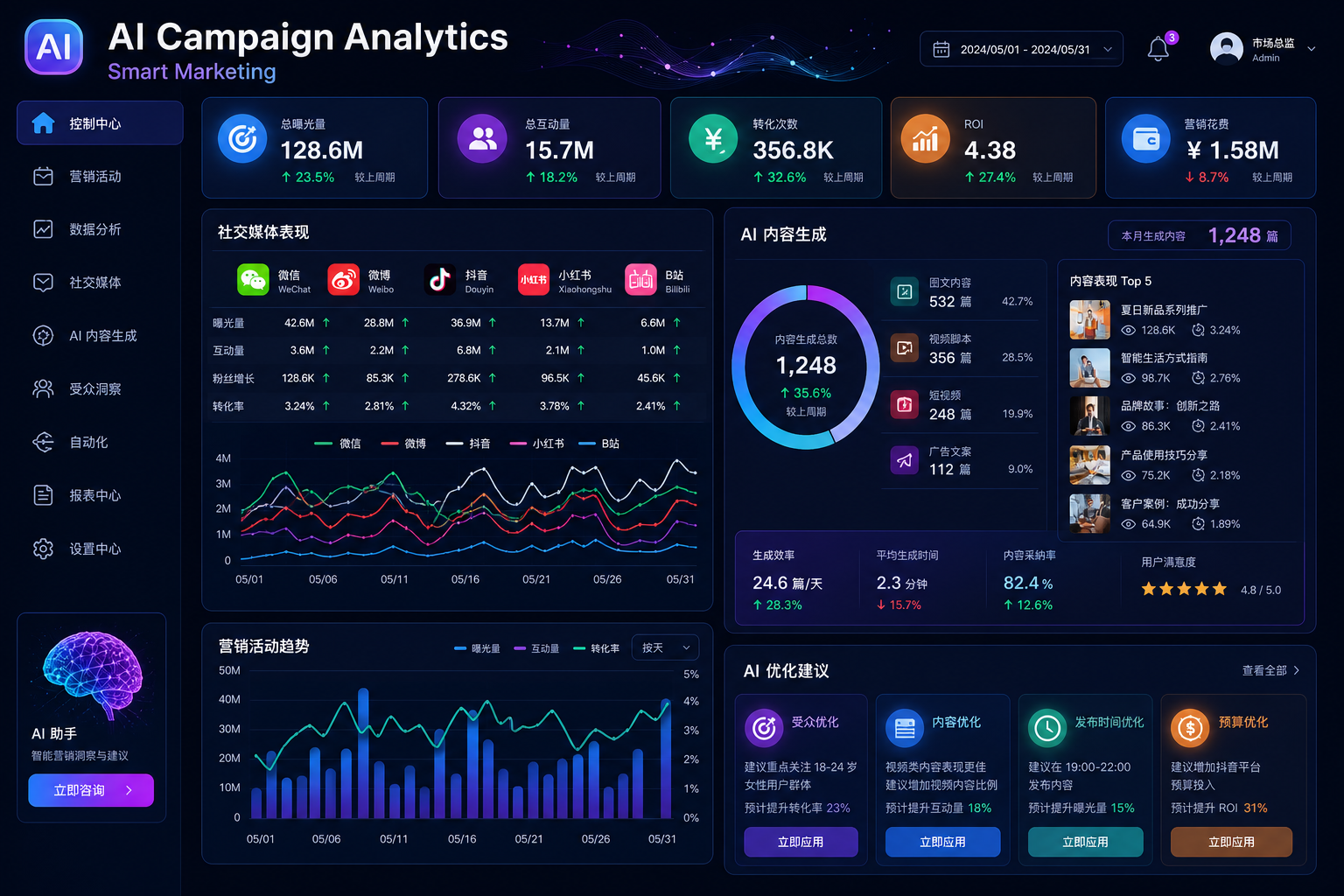
China's AI marketing landscape is shaped by three dominant forces: Baidu's AI Cloud (百度智能云), Alibaba's Lingfeng AI (阿里灵锋), and ByteDance's Volcano Engine (火山引擎). Each offers a comprehensive suite of AI marketing tools, and each is deeply integrated with its parent company's advertising and e-commerce platforms.
Baidu AI Marketing Suite
Baidu's AI marketing tools leverage its dominance in search and its Ernie Bot LLM:
- Baidu AI Creative Assistant (百度AI创意助手) — Generates ad copy, image creatives, and video scripts based on brand briefs and campaign goals. The tool claims to reduce creative production time by 60%
- Baidu Smart Bidding (百度智能竞价) — AI-powered bidding that optimises for conversions in real-time, adjusting bids based on user intent signals, time of day, device, and weather conditions
- Baidu AI Customer Service (百度智能客服) — Conversational AI that handles pre-sales inquiries on brand landing pages, with seamless handoff to human agents when needed
- Baidu Brand Zone AI (百度品牌专区AI) — Dynamic brand showcase pages that automatically adjust content and layout based on user profile and search intent
Alibaba Lingfeng AI Suite
Alibaba's marketing AI is tightly integrated with its e-commerce ecosystem:
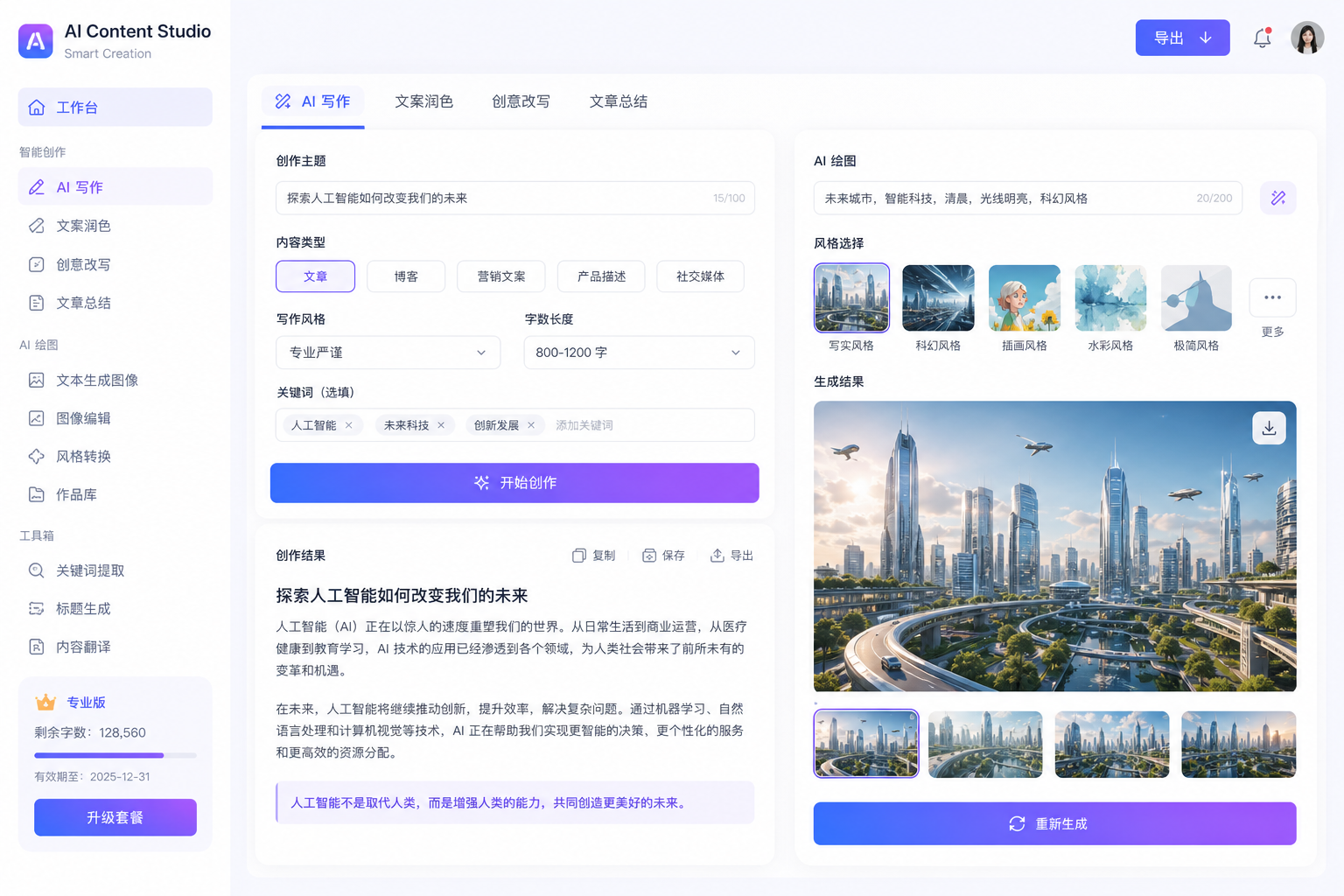
- Lingfeng Creative Studio (灵锋创意工坊) — Generates product images, lifestyle scenes, and short videos optimised for Tmall and Taobao listings. The tool uses generative AI to create model-free product photography, cutting studio costs by up to 80%
- Alibaba AI Targeting (阿里AI定向) — Predictive audience modelling that identifies high-intent consumers based on browsing behaviour, purchase history, and social data across Alibaba's ecosystem
- Quanzhan Smart Campaign (全站智投) — AI-managed campaigns that automatically allocate budgets across search, display, and affiliate channels to maximise ROI
ByteDance Volcano Engine
ByteDance's AI marketing suite powers the Douyin (TikTok China) advertising ecosystem:
- Douyin AI Creative Engine (抖音AI创意引擎) — Generates short-form video ads using AI avatars, product shots, and trending audio. The "Instant Creative" feature produces 100+ ad variations in under 5 minutes
- Ocean Engine Smart Bidding (巨量引擎智能出价) — AI bidding that optimises for cost-per-action (CPA) across Douyin, Toutiao, and Xigua Video
- Douyin AI Live (抖音AI直播) — AI-powered virtual livestreamers that operate 24/7, handling product demonstrations and basic customer questions without human intervention
AI-Generated Content in China Marketing
Text Generation
AI-generated marketing copy has become standard practice in China. Major brands, including L'Oréal, Nike, and Starbucks, now use AI tools for:
- WeChat Official Account articles — AI generates first drafts, which are then refined by human editors
- Product descriptions — Tmall and JD.com listings are routinely AI-generated, with human oversight for quality control
- Social media posts — Xiaohongshu (RED) notes, Douyin captions, and Weibo posts are increasingly AI-assisted
- Advertising copy — Baidu PPC and Douyin ad copy are primarily AI-generated, with A/B testing driving continuous optimisation
Critical caveat: While AI-generated content is widely used, Baidu's algorithm now penalises purely AI-generated content. The winning formula is AI + Human — use AI for speed and scale, but ensure human editorial oversight for quality, authenticity, and SEO performance.
Image and Video Generation
China's AI image and video generation tools have reached remarkable quality levels:
- Kling (可灵) by Kuaishou — Generates high-quality short videos from text prompts. Used extensively for product showcases and social media content
- Jimeng (即梦) by ByteDance — Integrated with Douyin Creative Studio, generates short video clips with brand elements
- Tongyi Wanxiang (通义万相) by Alibaba — Image generation specialised for e-commerce product photography
- Yige (一帧) — AI video editing tool that automatically creates highlight reels from raw footage
AI Avatars and Virtual Influencers
Virtual influencers have become a billion-yuan industry in China:
- A-SOUL — ByteDance's virtual idol group with over 20 million fans across Chinese platforms
- Ling (翎) — A virtual influencer contracted by major luxury brands including Gucci, Tesla, and Estée Lauder
- Brand-specific avatars — Many international brands now operate custom AI avatars on Douyin and Xiaohongshu, handling product demos, brand storytelling, and customer engagement 24/7
AI-Powered Targeting and Personalisation
The Precision Advantage
China's AI marketing platforms offer targeting precision that Western platforms are years from achieving. This is because Chinese platforms operate within walled gardens that capture unprecedented amounts of first-party data:
Baidu AI targeting factors include:
- Search history and intent signals (100M+ daily search queries analysed)
- Location data (GPS, Wi-Fi triangulation, transit card usage)
- App usage patterns (through Baidu's mobile analytics SDK, installed on 90%+ of Chinese Android phones)
- Purchase behaviour (credit card, Alipay, WeChat Pay transaction data)
Douyin AI targeting factors include:
- Video viewing duration (per-second engagement data)
- Content interaction patterns (likes, shares, comments, saves)
- Voice query analysis (Douyin's voice search captures intent signals)
- Shopping behaviour (in-app purchases, product page visits, abandoned carts)
Predictive Audience Modelling
AI-powered predictive models can now identify potential customers before they even begin actively searching for a product category:
- Alibaba's "Future Purchase" Model — Predicts with 87% accuracy which users will purchase a product category within the next 30 days, based on behaviour patterns across Taobao, Tmall, Alipay, and Youku
- Baidu's "Intent Explorer" (意图探索) — Identifies users showing early-stage interest signals (comparison searches, review reading, price checking) and surfaces brand content preemptively
- Douyin's "Interest Graph" (兴趣图谱) — Maps users into micro-interest segments based on video consumption patterns, enabling hyper-targeted content recommendations
Measuring AI Marketing ROI
AI-powered campaigns require different measurement frameworks:
| Metric | Traditional | AI-Enhanced |
|---|---|---|
| Attribution | Last-click | Multi-touch with AI-assigned weights |
| Creative testing | A/B manual | Multivariate with AI optimisation |
| Lifetime value | Historical average | AI-predicted LTV |
| Audience targeting | Demographic segments | AI-generated look-alike + intent models |
| Budget allocation | Channel % split | Real-time AI optimised allocation |
| Campaign optimisation | Weekly manual | Real-time AI adjustments |
The Measurement Stack
Leading international brands in China use a combination of:
- Platform-native AI analytics (Baidu AI Analytics, Douyin Data Center)
- Third-party AI attribution (GrowingIO, TalkingData)
- Custom AI dashboards built with Tongyi Qianwen or DeepSeek API integration
Compliance and Ethical Considerations
AI marketing in China operates within a specific regulatory framework:
- PIPL (Personal Information Protection Law) — Restricts how AI can collect and process personal data. Explicit consent is required for AI-driven profiling and targeting
- DSL (Data Security Law) — Requires data classification and protection measures for AI training data
- AI Content Labeling Requirements — AI-generated content for advertising must be labelled as such. New regulations effective March 2026 mandate clear AI disclosure on all commercial AI-generated content
- Algorithmic Transparency — Baidu and ByteDance are required to publish annual transparency reports on their recommendation algorithms
International brands should work with compliance partners to ensure their AI marketing activities remain within regulatory boundaries.
Action Plan: Implementing AI Marketing in China
Phase 1 (Month 1-2)
- Audit current marketing stack for AI readiness
- Select primary AI marketing platform (Baidu, Douyin, or Alibaba ecosystem)
- Set up AI targeting with first-party data integration
- Run pilot AI-generated creative campaigns
Phase 2 (Month 3-4)
- Deploy AI customer service on key landing pages
- Expand AI-generated content across WeChat and social media
- Implement AI-powered bidding for paid search and social
- Set up AI attribution and dashboard
Phase 3 (Month 5-6)
- Integrate predictive audience modelling
- Launch AI virtual influencer or avatar (if applicable)
- Deploy cross-platform AI campaign optimisation
- Regular compliance audit cycle
Conclusion
AI marketing in China is not a future trend — it is the current operating reality. International brands that treat AI as an experimental add-on will find themselves outspent, out-targeted, and out-performed by competitors who have fully integrated AI into their marketing stack.
The key insight is that China's AI marketing tools are not just about cost reduction. They enable capabilities — predictive targeting, real-time creative optimisation, 24/7 virtual engagement — that were simply impossible in the pre-AI era. For international brands entering China, embracing AI marketing is not optional. It is the minimum entry requirement for competing effectively in the world's most sophisticated digital market.
Ready to transform your China marketing with AI? YIVA Digital specialises in integrating international brands into China's AI marketing ecosystem. Book a strategy session →
Published by YIVA Digital — Your partner for China market entry and growth since 2008.